Voice AI for Real Estate Investors: Qualifying Leads and Booking Appointments 24/7
Real estate investors do not lose deals only because they lack lead flow. They lose deals because speed slips, follow up gets uneven, and live conversations happen at inconvenient times. A seller fills out a form after dinner, calls back during a site visit, or responds to a text while the acquisitions manager is on another line. In that gap between interest and response, momentum fades.
That is where voice AI for real estate investors has become useful, not as a gimmick, and not as a replacement for judgment, but as a practical layer inside a real estate lead follow up system. When it is set up well, a voice agent can answer inbound calls, respond after hours, ask qualification questions, log outcomes, and book appointments around the clock. For investors working motivated seller leads, those basic operational wins matter more than flashy demos.
The strongest use case is simple. Real estate investor leads come in from PPC, SEO, cold calling, SMS marketing for real estate investors, or referrals. Some are serious. Some are curious. Some are tire kickers. Your team should not spend peak selling hours chasing every missed call manually, nor should a good lead wait until morning because no one was available at 9:17 p.m. Local time. A capable AI phone agent for real estate gives you coverage at the top of the funnel, where consistency often matters more than eloquence.
The real bottleneck is not lead generation alone
Many operators focus heavily on real estate lead generation, skip tracing for real estate investors, property owner lookup, and list quality. Those matter. If you want to find motivated sellers or build off market property leads, data and targeting still drive the machine. But after years of watching investor pipelines, I can say the operational bottleneck usually appears one step later.
A campaign starts producing calls and text replies. The CRM fills up. The team is optimistic for two weeks. Then reality shows up. Response times stretch. Seller lead follow up becomes inconsistent. Notes get spotty. Appointment setting depends on who is working that day and how disciplined they feel by 6:30 p.m. A business can spend aggressively on seller lead generation and still underperform because its real estate lead management process is shaky.
That is why so much of modern real estate investor software has shifted toward real estate automation, real estate marketing automation, and AI lead follow up. Investors are trying to protect the expensive part of the funnel. They already paid to get the phone ringing. Now they need a reliable way to engage every seller lead without asking a small team to behave like a call center 24 hours a day.
Where voice AI fits in an investor workflow
Voice AI works best when it handles the early, repeatable parts of a seller conversation. It is especially useful for screening inbound interest, managing missed calls, and catching after-hours responses that would otherwise sit untouched. In the real estate acquisitions process, that first interaction is often about establishing basic intent. Is the caller asking about a property you marketed, or are they a property owner who wants to sell? Are they looking for speed, convenience, certainty, or just a ballpark offer? Are they open to a next step?
For real estate AI to be effective here, it does not need to act like a master negotiator. It needs to be dependable. It needs to greet the caller, identify the reason for the call, collect the right facts, and move the lead into the correct lane inside your real estate sales pipeline.
A voice agent can support several practical moments in that process:
- answer inbound seller calls when the team is unavailable
- qualify seller leads by asking structured questions
- book appointments for an acquisitions rep
- trigger seller lead follow up across call, SMS, or email
- capture missed opportunities that would otherwise cool off overnight
That is why the conversation around AI for real estate investors should stay grounded in operations. This is less about novelty and more about throughput, lead nurturing real estate teams can actually sustain, and tighter handoffs inside an investor CRM.
The difference between answering and qualifying
A lot of businesses hear “24/7” and assume the biggest benefit is availability. Availability matters, but qualification is where the economics change.
If you run real estate wholesaling software, an investor CRM, or a broader real estate automation software stack, your acquisitions team should spend most of its live time on leads that have enough motivation to justify human attention. That is not the same as saying low intent leads have no value. It means they need a different follow up track.
Motivated seller qualification usually revolves around a few familiar themes: why they are considering selling, whether timing is urgent, whether they are open to an appointment, and whether the conversation should advance to a specialist. Voice AI can collect that baseline consistently. Then your real estate investor follow up becomes more intentional.
One investor I worked with years ago had a simple but chronic issue. The team got plenty of inbound calls from direct mail and text message marketing real estate campaigns, but half the callbacks happened while the owner was driving between properties. They had enthusiasm, decent data, and no stable intake process. The result was predictable. Some callers got a great conversation. Others got a rushed minute on speakerphone. Others hit voicemail and never re-engaged. Their problem was not lead volume. It was variability. A structured intake layer would have improved conversion before they spent another dollar on more motivated seller data.
That lesson still applies now, whether you are using AI real estate investing tools or more traditional real estate investor software. Consistency closes the gap between interest and action.
Why appointment booking matters more than most investors expect
A qualified conversation has value only if it moves somewhere. That “somewhere” is usually a booked call, a property walkthrough, or a scheduled conversation with acquisitions. Voice AI becomes especially useful when it can do more than gather information. If it can book appointments and route that information directly into your AI CRM for real estate investors or real estate AI CRM setup, you eliminate one https://charlieyiuz429.almoheet-travel.com/automated-sms-for-real-estate-investors-practical-follow-up-workflows of the easiest places for deals to stall.
Booking is not glamorous, but it is a major source of leakage. Sellers often respond in narrow windows. They may be on break at work, walking the dog, or finally dealing with a property issue after ignoring it for months. If that moment is met with friction, interest fades. If the system can capture the conversation and secure a next step immediately, your team starts the following day with actual meetings on the board rather than a pile of stale callbacks.
This is one reason platforms positioned as real estate investor CRM systems have expanded beyond contact storage. Investors need real estate follow up automation, AI lead management, and cross channel response capabilities because the handoff between “new lead” and “meaningful appointment” is where time kills momentum.
REI Reply as an example of the category
Among investor-focused platforms, REI Reply is one example worth mentioning because it is built specifically for real estate investors. Its positioning is clear. It is designed for wholesalers, fix-and-flippers, buy-and-hold investors, and acquisitions teams that are already generating leads through channels like PPC, SEO, cold calling, or SMS outreach. That distinction matters. It is not framed as a lead provider in the usual sense, but as a conversion engine for leads already entering the business.
For teams evaluating AI tools for real estate investors, that matters because software should match the actual bottleneck. If your issue is converting inbound and outbound responses into live conversations and booked appointments, a platform with inbound and outbound calling, SMS, missed-call text back, and AI voice assistants inside one system is pointed at the right problem.
REI Reply also states that its AI voice agent can qualify leads, book appointments, and follow up 24/7 across calls, SMS, email, and socials. In practice, that points to an increasingly common operating model in AI real estate CRM environments. The voice layer is not isolated. It is part of a broader real estate marketing automation and lead management flow. A seller calls in, the system responds, outcomes are captured, and follow up continues through the channels already tied to the record.
The platform also says a subscription includes access to verified motivated seller data through REI AI Leads. For some investors, that creates a bridge between top-of-funnel sourcing and conversion workflows. Again, the useful way to think about it is not magic lead generation. It is alignment between data, outreach, and follow up.
Voice AI is strongest when paired with SMS and CRM discipline
No real estate AI assistant should operate in a vacuum. Voice conversations are only one part of the process. In most investor businesses, the broader engine includes real estate SMS marketing, automated SMS, and organized seller lead follow up inside a CRM for real estate investors.
This is where a lot of teams get confused. They ask whether voice AI is better than SMS follow up. That is the wrong comparison. For motivated seller leads, those channels usually reinforce each other. A seller may ignore a call but reply to a text. Another may respond to a text but prefer to explain the situation by phone. A third may call first, then need reminders before booking a walkthrough. Good real estate SMS automation and voice automation work together inside the same lead record.
An integrated workflow might look like this in practical terms. A seller returns a missed call after business hours. The voice agent answers, asks a few qualification questions, and either books an appointment or flags the lead for review. If the conversation drops or the seller says “text me,” the system can continue the exchange through automated text messaging. By morning, the acquisitions rep can see the transcript, disposition, and next step inside the real estate investor CRM. That is a more useful form of real estate investor automation than simply blasting more messages.
For teams already running SMS for real estate investors, this matters even more. Texting can create response volume quickly, especially when working through property owner data or distressed seller leads. But response volume without a disciplined real estate follow up system just creates another backlog. Voice AI can absorb part of that pressure by handling the immediate call-based interactions that a texting campaign often triggers.
Compliance is not optional, especially with calls and text
This part is less exciting than automation demos, but it is where mature operators separate themselves from reckless ones.
If you are using AI calling real estate systems, real estate investor texting, or any form of automated seller follow up, compliance has to sit upstream of convenience. The FTC guidance is clear on several points that matter to investors. Telemarketers generally may not call outside 8 a.m. To 9 p.m. Local time without prior consent. Do Not Call rules must be honored. National Registry and company-specific DNC lists cannot be used for any purpose other than compliance. Prerecorded telemarketing calls require prior signed, written agreement, and electronic consent can qualify if E-SIGN requirements are met.
Those are not details to patch in later. They shape how your real estate call automation and SMS automation software should be configured from day one.
The same is true on the texting side. A2P 10DLC is the U.S. Carrier standard for application-to-person SMS traffic sent over 10-digit long code numbers, and its purpose is to support verified, consensual messaging. If your business relies on bulk SMS real estate campaigns, automated SMS for real estate investors, or real estate text message automation, then A2P 10DLC registration and business texting compliance are operational issues, not paperwork annoyances. Deliverability depends on them. Carrier filtering depends on them. Long term channel stability depends on them.
A lot of investors learn this the hard way. They focus on volume, ignore consent and setup quality, and then wonder why text message deliverability drops or why real estate SMS deliverability becomes unreliable. Good real estate SMS automation is not just fast. It is compliant and structured.
The trade-offs investors should think through before deploying voice AI
Voice AI is useful, but it is not a free pass around process design. There are trade-offs, and serious operators should look at them honestly.
First, not every seller conversation should be automated to the same degree. A basic intake call is different from a nuanced negotiation about inherited property, title complexity, or family dynamics. Automated lead qualification works well at the front end. It should not be mistaken for the full art of acquisitions.
Second, the script logic matters. If the system asks the wrong questions, asks them in the wrong order, or sounds stiff, it can create friction instead of reducing it. AI seller conversations have to feel purposeful. In real estate acquisitions, sellers often call because they want clarity and a sense that someone understands the situation. A clumsy flow can lose trust quickly.
Third, integration matters more than raw features. A voice AI agent that books appointments but fails to keep the real estate sales pipeline clean creates more administrative work, not less. This is why many teams look for an investor CRM or motivated seller CRM that keeps conversations, notes, outcomes, and follow up in one place.
Fourth, your team still needs standards. Real estate follow up automation works only when humans know what happens next. What qualifies for a same-day callback from acquisitions? Which seller leads stay in automated lead nurturing? When does a warm lead become a priority lead? Software cannot answer those management questions for you.
What “24/7” should mean in practice
There is a tendency to romanticize round-the-clock response. It helps, but only when the business defines what after-hours engagement is supposed to accomplish.
In practice, a 24/7 AI lead qualification layer should do three things well. It should acknowledge every inbound opportunity promptly. It should gather enough information to preserve intent and route the lead correctly. And it should create a concrete next step, ideally a booked appointment or a scheduled human follow up. If it does those three things consistently, your pipeline improves even if the software never tries to imitate a senior acquisitions closer.
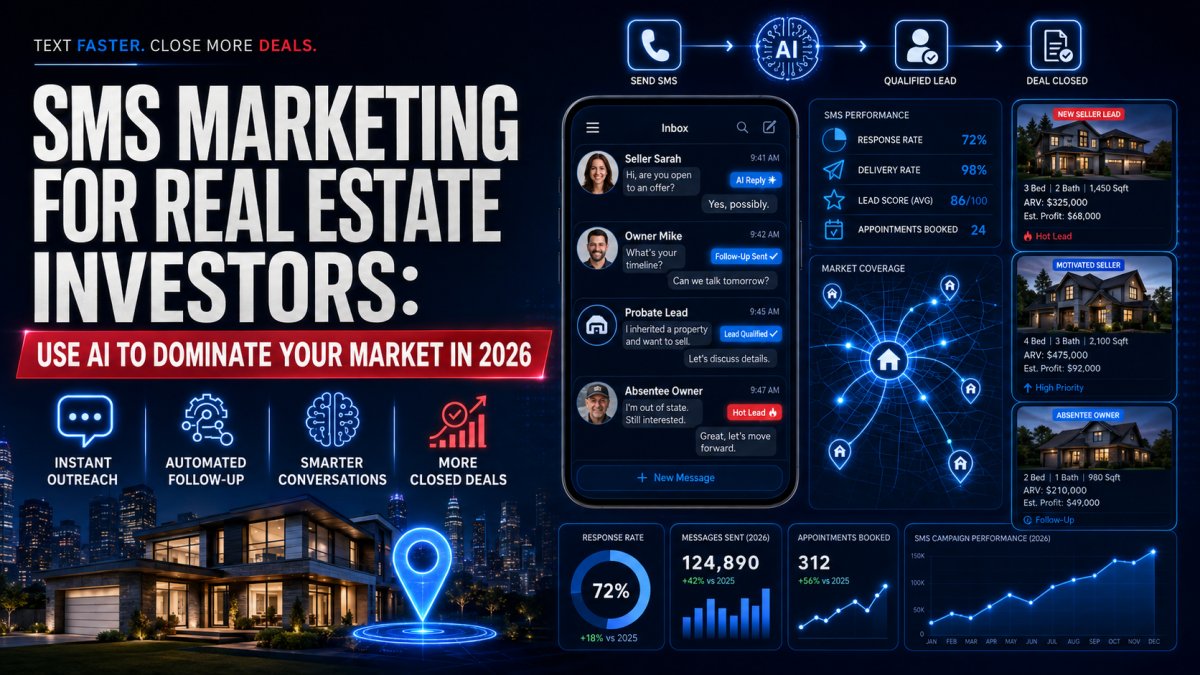
For wholesalers and buy-and-hold operators, this can be especially important when marketing to off market properties and distressed property leads. Sellers in those categories often contact investors during irregular hours because that is when stress surfaces. A code violation letter arrives. A tenant issue blows up. A probate conversation finally happens among siblings. The owner is not thinking about your office hours. They are reacting to their own reality. Real estate AI that captures that moment respectfully and efficiently has real value.
How to evaluate whether this belongs in your stack
Most investors do not need more software just to say they have real estate AI. They need fewer dropped opportunities and a clearer process. If your team already responds quickly, books appointments reliably, and maintains disciplined seller lead automation, then voice AI may be a marginal gain. If your business struggles with missed calls, stale callbacks, uneven follow up, or poor handoff between marketing and acquisitions, the gain can be meaningful.

The right evaluation questions are operational. Are inbound calls getting answered consistently? Are motivated seller follow up tasks piling up? Do after-hours leads receive any useful engagement? Is your real estate investor CRM giving acquisitions clear visibility into seller motivation, prior contact, and next actions? Are your SMS marketing compliance and A2P compliance processes stable enough to support multi-channel automation? If the answers are shaky, that is where voice AI starts to make sense.
This is also why category terms like AI for real estate wholesaling, AI acquisition assistant, or AI real estate assistant should be treated carefully. The label matters less than the workflow. A good system should strengthen real estate lead nurturing, real estate lead follow up, and appointment conversion. If it does not improve those basics, it is just another subscription.
The investors who benefit most
The businesses that tend to benefit fastest are not always the biggest. Often, they are the ones with healthy lead flow and limited staff bandwidth. A two- or three-person acquisitions operation running paid traffic, direct outreach, and real estate text marketing can feel stretched very quickly. Every new campaign channel increases the need for disciplined response.
That is why voice AI has gained traction alongside real estate marketing software, wholesaling automation, and AI lead generation real estate workflows. It gives lean teams a way to behave more consistently without pretending they can personally answer every call, every text, and every after-hours inquiry.

There is also a less obvious benefit. When routine qualification is handled consistently, the human team can spend more time where people still matter most, building trust, solving edge cases, and structuring deals. In other words, real estate investor automation should protect human attention, not erase it.
The practical takeaway
Voice AI for real estate investors is not about making the business feel futuristic. It is about making response, qualification, and scheduling less fragile. In a market where seller leads are expensive and timing matters, a system that can qualify leads and book appointments 24/7 can improve the part of the funnel where many investors quietly leak money.
The smart approach is measured. Pair voice AI with strong CRM habits, compliant calling and texting practices, and realistic expectations about where automation helps most. Use it to support AI lead follow up, seller lead follow up, and real estate follow up automation across the channels your prospects already use. If you are evaluating platforms like REI Reply, look at how well they connect calling, SMS, missed-call text back, lead management, and appointment setting inside a process your acquisitions team can actually run.
That is the standard worth keeping. Not whether the technology sounds impressive, but whether it helps you respond faster, qualify better, and show up to more appointments with the right context already in hand.